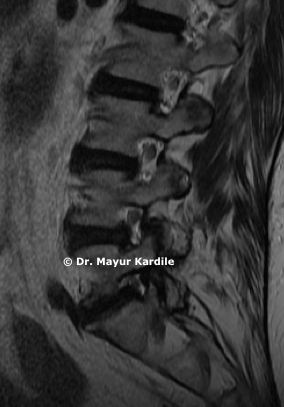
OLIF (Oblique Lumbar Interbody Fusion) is a minimally invasive lumbar fusion technique where the surgeon approaches the lumbar spine from the side (oblique anterior approach), completely avoiding the back muscles and nerves. This results in significantly less blood loss, faster recovery, and excellent fusion rates.
Key Advantages
What is OLIF?
OLIF is performed through a small incision on the side of the abdomen. The surgeon passes between the anterior abdominal wall and the psoas muscle to reach the lumbar spine from the side. This completely avoids cutting the back muscles and does not put the nerve roots at risk, unlike traditional posterior approaches.
When is OLIF Recommended?
- Lumbar degenerative disc disease with disc space collapse
- Spondylolisthesis (vertebral slippage)
- Degenerative scoliosis — multi-level deformity correction
- Adjacent segment disease after previous spine surgery
- Flatback deformity requiring correction
- Cases where back muscle disruption should be avoided
Advantages of OLIF
• Completely avoids back muscles — no posterior muscle disruption • Avoids nerve roots entirely • Very little blood loss • Large cage insertion through disc space — excellent bone fusion rates • Indirect decompression of nerves (disc height restoration relieves nerve pressure) • Can be combined with posterior fixation for added stability • Shorter hospital stay and faster recovery compared to traditional approaches
Recovery After OLIF
• Patient walks day 1 post-surgery • Hospital stay: 2–3 days • Return to sedentary work: 2–4 weeks • Full fusion: 4–8 months • No back muscles cut — significantly less post-operative back pain