
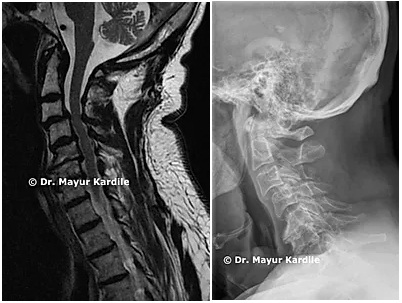
Cervical Laminoplasty is a motion-preserving surgical technique for treating cervical myelopathy (spinal cord compression in the neck). Instead of fusion, the procedure expands the spinal canal by hinging the lamina open, creating more space for the compressed spinal cord while preserving neck movement.
Key Advantages
What is Cervical Laminoplasty?
In cervical laminoplasty, the laminae (the bony roof of the spinal canal) are hinged open like a door — one side of the lamina is cut completely (the 'open door'), the other side is partially cut (the 'hinge'). This expands the spinal canal and relieves cord compression without removing the laminae entirely and without fusion.
When is Cervical Laminoplasty Recommended?
- Cervical spondylotic myelopathy affecting 3 or more levels
- Ossification of the Posterior Longitudinal Ligament (OPLL)
- Multi-level cervical disc disease with myelopathy
- When preservation of cervical motion is important
- As an alternative to multi-level ACDF
Advantages Over Fusion
• Preserves cervical spine motion (unlike fusion which eliminates movement) • No adjacent segment degeneration from immobility • Single posterior incision — covers multiple levels • No plate/screw fixation needed • Lower complication profile than multi-level ACDF • Effective for multi-level disease (3–6 levels)
Recovery
• Patient walks same day • Hospital stay: 2–3 days • Soft cervical collar for 4–6 weeks • Return to work: 3–4 weeks • Return to physical activities: 6–8 weeks