
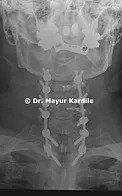
Posterior Cervical Instrumentation and Fusion (PCIF) is a surgical procedure performed from the back of the neck using screws, rods, and bone graft to stabilize and fuse the cervical spine. It is used for cervical instability, myelopathy with kyphosis, or multi-level cervical disease requiring structural stability.
Key Advantages
Addresses both instability and deformity
Direct cord and nerve decompression
Excellent stability with modern implants
Can be combined with anterior procedures
When is PCIF Recommended?
- Cervical myelopathy with kyphotic deformity
- Atlantoaxial instability (C1-C2 fusion)
- Subaxial cervical instability from trauma or disease
- Failed previous cervical surgery requiring revision
- Multi-level cervical disease with deformity
The Procedure
PCIF is performed through a posterior midline neck incision. Lateral mass screws or pedicle screws are placed into the affected vertebrae and connected with rods. Bone graft is placed over the decorticated bone to promote fusion. Decompression of the spinal cord and nerve roots can be performed simultaneously.
Recovery
• Hospital stay: 3–5 days • Hard cervical collar for 6–8 weeks • Return to work: 6–8 weeks • Full fusion: 6–12 months