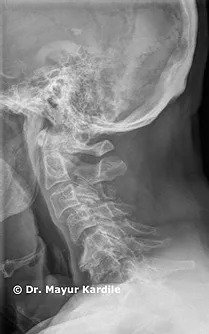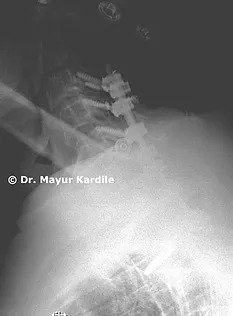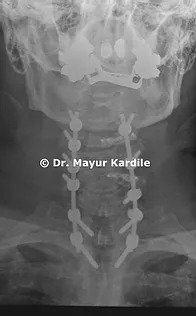
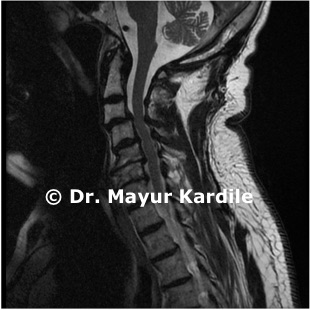
Cervical Spondylotic Myelopathy (CSM) is a condition caused by compression of the spinal cord in the neck (cervical spine). It is the most common cause of spinal cord dysfunction in adults over 55 years of age. CSM can occur with or without associated cervical kyphosis (forward bending of the cervical spine). Pune Spine Institute is a centre of excellence in the diagnosis and treatment of CSM with Kyphosis.
What is Cervical Spondylotic Myelopathy?
The cervical spine (neck) has 7 vertebral bones and 6 intervertebral discs. In CSM, gradual degeneration of the cervical discs and joints causes narrowing of the spinal canal and compression of the spinal cord. This leads to a constellation of symptoms affecting the hands, arms, legs, and sometimes bladder and bowel function.
Symptoms of Cervical Myelopathy
• Weakness and clumsiness of hands (difficulty with fine motor tasks like buttoning clothes, writing, using a keyboard) • Numbness and tingling in hands and fingers • Neck pain and stiffness • Radiating pain into arms (radiculopathy) • Weakness in legs and difficulty walking • Loss of balance and coordination • In severe cases: loss of bladder or bowel control These symptoms often progress slowly and may be mistaken for normal aging changes.
Diagnosis
• Clinical examination: Neurological examination including assessment of hand function, reflexes, gait, and balance • MRI of the cervical spine: Gold standard for diagnosis — shows cord compression, disc herniations, spinal canal narrowing, and signal changes in the cord • CT myelogram: In patients unable to undergo MRI • X-rays: To assess cervical alignment and detect instability • EMG/NCV: To differentiate from peripheral nerve conditions
Treatment of Cervical Spondylotic Myelopathy
Non-surgical treatment: Physical therapy and pain management may be tried for mild cases. However, CSM is generally progressive and surgery should not be delayed unnecessarily. Surgical Treatment: Surgery is indicated for most patients with significant or worsening myelopathy. Options include: • ACDF (Anterior Cervical Discectomy and Fusion): Performed from the front of the neck. Excellent for 1–3 levels. • Cervical Laminoplasty: A motion-preserving alternative that expands the spinal canal while preserving neck movement. Preferred for multi-level disease. • Posterior Cervical Instrumentation and Fusion (PCIF): For cases with cervical kyphosis requiring realignment. Outcomes: Surgery halts progression in most patients and may lead to significant improvement in hand function and walking ability.
Case Images