
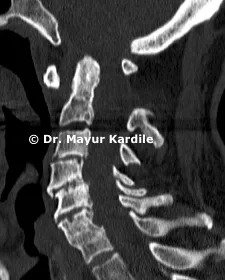
Atlantoaxial instability is abnormal excessive movement between the C1 (atlas) and C2 (axis) vertebrae at the top of the cervical spine. This can cause compression of the spinal cord and is a serious condition requiring expert evaluation and treatment.
Causes of Atlantoaxial Instability
• Rheumatoid arthritis (most common cause in adults) • Down's syndrome (associated with ligamentous laxity) • Odontoid (dens) fractures • Trauma • Congenital anomalies • Infections (grisel syndrome) • Bone tumors
Symptoms
• Neck pain and stiffness • Headaches, especially at the back of the head • Progressive weakness and numbness in arms and legs • Difficulty walking and loss of balance • In severe cases: quadriplegia (paralysis of all four limbs) • Signs of spinal cord compression
Diagnosis
• X-rays including dynamic flexion-extension views • CT scan of the upper cervical spine • MRI to assess spinal cord compression • Careful neurological examination
Treatment
Surgical stabilization of C1-C2 is the primary treatment for significant atlantoaxial instability: • C1-C2 Posterior Fusion: The gold standard surgical treatment. Screws are placed into C1 and C2 and connected with rods to achieve stability. • Results are generally excellent when surgery is performed in experienced hands. Dr. Kardile has significant experience in treating atlantoaxial instability including complex cases.