Anterior Cervical Discectomy and Fusion (ACDF) is the gold standard surgical treatment for cervical disc herniation and cervical spondylotic myelopathy. This procedure involves removing the degenerated cervical disc from the front of the neck and fusing the two vertebral bones together, relieving pressure on the compressed nerve or spinal cord.
Key Advantages
What is ACDF?
ACDF is performed through a small transverse incision over the front of the neck. The surgeon removes the degenerated or herniated cervical disc, decompresses the nerve root or spinal cord, and fills the disc space with a bone graft or cage to promote fusion. A small metal plate may be added for additional stability.
When is ACDF Recommended?
- Cervical disc herniation causing arm pain (radiculopathy) not responding to conservative treatment
- Cervical spondylotic myelopathy (spinal cord compression causing weakness, imbalance)
- Progressive neurological weakness in the arms or hands
- Neck pain with arm pain from disc disease at 1–3 levels
- Cervical instability
Case Example: ACDF for Cervical Radiculopathy
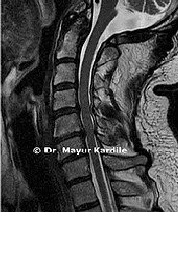
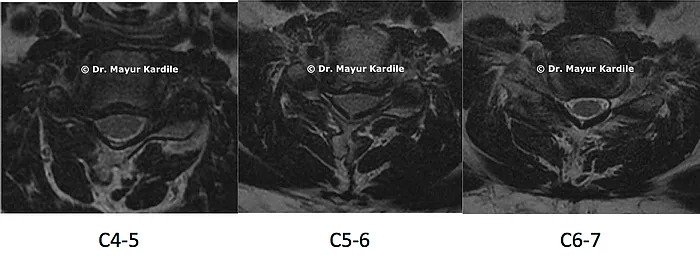
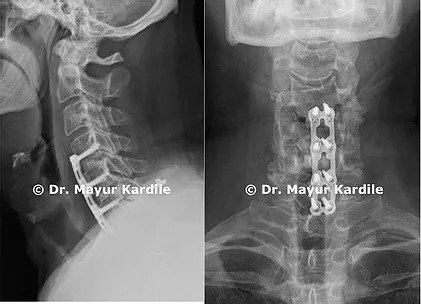
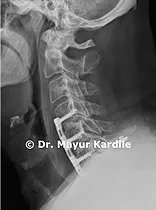
A 51-year-old man presented with pain and weakness in his right arm. MRI revealed foraminal narrowing and nerve root compression at C4-5, C5-6, and C6-7 levels. Dr. Kardile performed ACDF surgery through a small transverse incision over the front of the neck: • Disc removal and nerve decompression at C4-5, C5-6, C6-7 • Cage insertion and plate fixation • Patient regained full strength in right arm over 6 months post-surgery • Excellent long-term outcome
Recovery After ACDF
• Patient walks the same day of surgery • Hospital stay: 1–2 days • Cervical collar worn for 4–6 weeks for comfort • Return to office work: 2–3 weeks • Return to physical work: 6–8 weeks • Full fusion: 3–6 months
Case Images