
Atlanto-Axial Instability
Published by Dr. Mayur Kardile — Pune Spine Institute
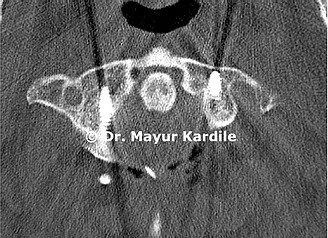
Case Overview
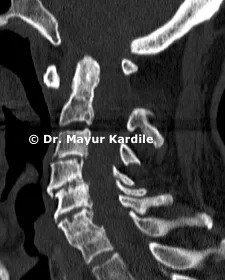
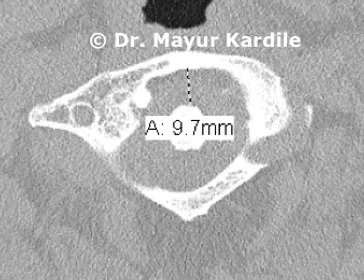
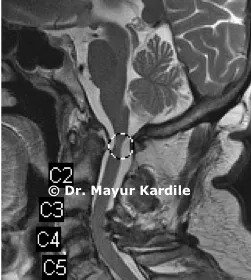
A 61-year-old gentleman with rheumatoid arthritis presented with neck pain and gait instability. He also had clumsiness of hand movement and spasticity — signs of cervical myelopathy from upper cervical cord compression.
Investigations revealed instability between the first and second cervical vertebra (C1 and C2) causing dynamic compression of the cervical spinal cord. This is a known complication of rheumatoid arthritis where inflammatory destruction of the transverse ligament causes atlantoaxial subluxation.
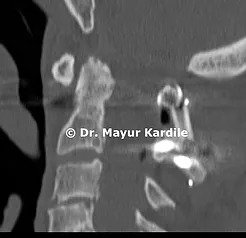
C1-C2 stabilization and fusion were done using C1 lateral mass and C2 translaminar screw fixation. This technique provides strong fixation without requiring complex C2 pedicle screws, making it safer in this elderly patient with rheumatoid changes.
Postoperative CT scan and X-ray confirmed good C1-C2 reduction. Patients with rheumatoid arthritis can develop this type of cervical spine instability requiring surgical treatment when conservative measures fail.
Key Case Highlights
- 161-year-old with rheumatoid arthritis — C1-C2 instability with cord compression
- 2Symptoms: neck pain, gait instability, hand clumsiness, spasticity
- 3Rheumatoid arthritis destroys transverse ligament → atlantoaxial subluxation
- 4C1-C2 stabilization using C1 lateral mass + C2 translaminar screws
- 5Good reduction confirmed on post-op CT scan and X-ray
- 6Early surgery prevents permanent neurological damage
Facing a Similar Spine Problem?
Get expert opinion from Dr. Mayur Kardile — Pune's leading spine surgeon
Book a Consultation
Consult Dr. Mayur Kardile — Specialist in Complex Spine Surgery
+91 7774040002Request Appointment
Dr. Mayur Kardile
MS Orth | DNB | MCh (Toronto) | FRCSC
Fellowship-trained spine surgeon from Toronto. Trained in North America with expertise in complex deformity correction, minimally invasive surgery, and revision spine procedures.
View Full Profile